
PlotToTable · Put the harvest up
Preserve
Put the harvest up safely: canning, dehydrating, fermentation, and pantry storage. Tested recipes and real numbers, no folklore.
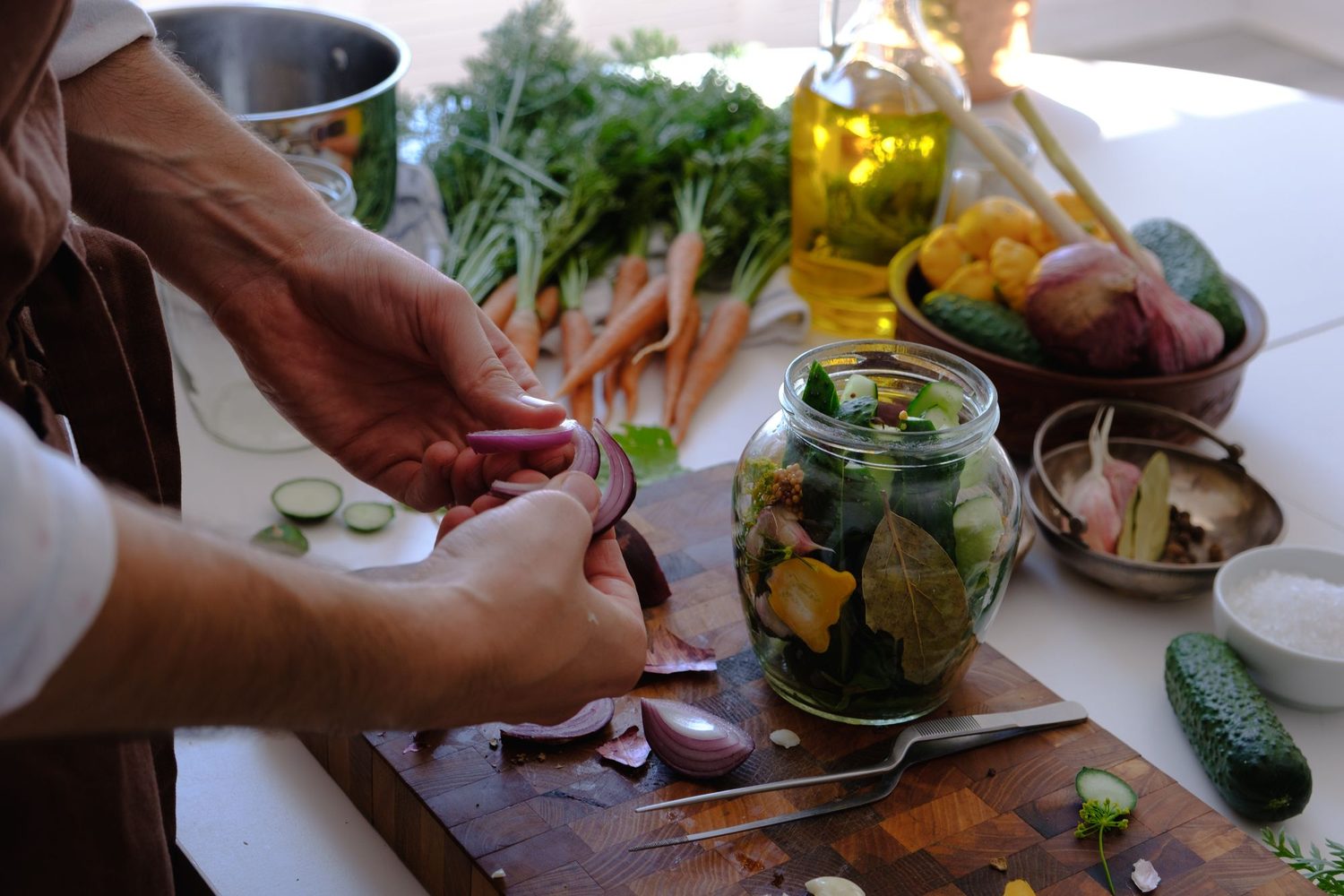
Can, pickle, and preserve what the garden gives you, so nothing goes to waste.

Browse by topic
Canning & preserving25Can, ferment, and pickle recipes to put the harvest up safely.

The best fermenting crock for vegetables and fruits: a water-seal stoneware crock for big sauerkraut batches and a mason jar kit for beginners. No canner, no heat, plus the 1 rule that keeps every batch safe.

Freezing is the easiest way to save a harvest. Why you blanch first, how to freeze so pieces stay loose, what freezes well, and how long it keeps.

Drying is the easiest way to save a herb glut. When to pick, four ways to dry (air, dehydrator, oven, microwave), which herbs to freeze instead, and how to store them.

Six ways to save a garden glut, compared: canning, freezing, drying, fermenting, pickling, and cool storage. Which method fits each crop, how long it keeps, and where to start.

The easiest way to put up cucumbers: a quick brine, a jar, and the fridge. No canner, no processing, crisp pickles ready in 24 hours.

Turn a tomato glut into jars of sauce for winter: the cook-down, the acid step that keeps it safe, exact processing times with an altitude chart, and a fix for watery sauce.
Show all 25 (19 more)

Not every crop is worth saving, and each one has a best method. A crop-by-crop guide to what to can, freeze, dry, freeze-dry, or just store in a cool room.

Turn a glut of tomatoes and peppers into salsa. Eat it fresh this week, or can it safely with added acid for about 6 pints on the shelf.

Sweet, tangy bread-and-butter pickles from your cucumber glut. A short salt soak, a spiced vinegar brine, and a water-bath process for about 6 pints.

Classic garlic-dill pickles that stay crisp. A vinegar brine, fresh dill and garlic, and a short water-bath process for about 7 pints on the shelf.

Crisp, garlicky pickled green beans with a kick. A vinegar brine, fresh dill and garlic, and a short water-bath process for about 6 pints.

Sweet-and-spicy pepper jelly from your garden peppers. Vinegar, sugar, and pectin set a shelf-stable jar, canned safely for about 6 half-pints.

Turn a summer zucchini flood into sweet-tart relish. Follows the tested water-bath process and yields about 6 half-pints for hot dogs, burgers, and tuna salad.

Sweet-and-sour pickled beets, canned the safe way. Follows the NCHFP tested water-bath process and yields about 6 pints from your garden beet harvest.

Thick, sweet-savory tomato jam for cheese boards and burgers. A fridge-and-freezer jam that yields about 4 half-pints from a tomato glut.

Tangy tomatillo salsa verde, canned safely for the pantry. Follows the NCHFP tested water-bath process with the acid step that keeps it shelf-stable, yielding about 5 pints.

Crisp, spicy pickled okra with no slime. Follows the NCHFP tested vinegar-brine water-bath process and yields about 6 pints from your okra harvest.

Put up a bright, tangy sweet corn relish with peppers and onion. Follows the NCHFP tested water-bath process and yields about 6 half-pints for the pantry.

Tangy pickled carrot rounds from a garden glut. Follows the NCHFP tested vinegar ratio and water-bath process, and yields about 4 pints.

Turn a garden cabbage into tangy sauerkraut with just salt and time. A simple fridge ferment that needs no canner and no starter.

Turn a glut of hot peppers into deep, tangy fermented hot sauce. A simple salt brine ferment, blended and bottled, ready in 1 to 2 weeks.

Turn a berry glut into bright, spreadable jam. A water-bath process for blackberries, raspberries, or strawberries that yields about 6 half-pints.

No food mill? You can still make smooth tomato sauce. Peel the tomatoes first, then simmer and blend, or push it through a sieve. Here are three ways with what you own.

Freeze drying keeps about 97% of nutrients and stores 25 years. Here is what freeze dries best, what turns rancid, and the honest gear to buy.

The four home food storage methods compared on shelf life, cost, nutrition, and effort: freeze-drying, canning, dehydrating, and Mylar for dry staples.
Store it23Keep the harvest good in the pantry, fridge, and cellar.

No canning needed. Cure them right and these crops keep for months in a closet or basement. The temperatures, the mistakes to avoid, and how long each lasts.

Keep onions, potatoes, and squash for months with the right bins and cool storage. The all-around pick, the serious cellar setup, and a small-space rack.

Cured right, onions and garlic keep for months with no fridge and no freezer. The harvest sign, the 2 to 3 week cure, and how to store them.

The foods worth storing win on three things: calories per dollar, shelf life, and nutrition. Here are the proven staples and how long each really keeps.

High calorie survival foods, ranked. An adult needs about 2,000 calories a day. Store the densest foods first: oil, peanut butter, rice, and beans.

High protein survival foods ranked, cheapest and most storable first. Beans, peanut butter, canned meat, powdered milk, and more for a long emergency.
Show all 23 (17 more)

A bookmark-worthy shelf life chart for pantry staples, plus the honest split between best quality and still safe to eat.

Build a 3 month food supply the simple way: store what you eat, eat what you store. A per-person target, a starter shopping list, and a 4-step plan.

The serious long-term plan: how much grain, beans, fat, and salt to store per adult for a year, how to pack it to last, and why you still need a garden.

A full freezer holds safe for about 48 hours if you keep the door shut. The FSIS 40-degree rule, what you can refreeze, dry ice math, and the triage order.

The cc sizing chart for Mylar bags and buckets: about 300cc per gallon for dense foods, 500cc for airy ones, 2000 to 2500cc for a 5-gallon bucket. Plus the two foods to never use them with.

Emergency buckets are labeled in servings, but your family eats calories. The 60-second math that turns any bucket label into real days of food, no brand-bashing required.

A Medium freeze-dryer holds 7 to 10 lb of fresh food per 24-to-40-hour batch. The batch math for a year of storage, what consumables cost, and when to size up.

Appetite fatigue is when people quit eating the same rations day after day. Kids and seniors are hit first. Here is the variety math and spice shelf that fixes it.

Wheat, beans, and rice carry almost no vitamin C, and scurvy sets in after 1 to 3 months without it. Here is the vitamin C math and the storable foods that cover the gap.

Kids do not eat like adults. A toddler needs about 1,000 calories a day and a teen can need over 3,000. Here are the real per-age numbers from the Dietary Guidelines.

Water is the first thing you run out of. How much to store per person, safe food-grade containers, rotation, and how to purify water in an emergency.

A stockpile you never rotate is money in the trash. Learn FIFO food storage rotation: date every item, shelve oldest in front, cook from the front.

How much food to store per person: about 2,000 calories a day per adult, plus the classic one-year bulk-staple pounds. Real targets for 3 days to 1 year.

Store what you eat and eat what you store. Build a beginner prepper pantry from foods your family already cooks, so nothing goes to waste.

Rice and beans are useless without salt, oil, and yeast. Here are the glue staples most preppers forget and how long each really keeps.

The 1 gallon per person per day rule only covers drinking. Real math for cooking and hygiene, plus how much a family of 4 needs for 3 days, 2 weeks, and a month.

Most food supplies plan for healthy adults only. Here is how to stock for babies, elderly, special diets, and pets, the people and animals who cannot wait.
Keep going
Build your free planSow dates from NOAA frost records for every US ZIP · Every number source-cited